


OUT in Zimbabwe
❝
In Zimbabwe there is no law that protects us. There are no police that protects us. Our own law discriminates against us." - Research respondent.
About this research
Homosexuality has been said to be ‘Un-African’ and many world leaders, including leaders of Zimbabwe, have suggested this. However, we know that this is not necessarily true, as Zimbabwe has re-written its own sexual history. Our research report highlights that: “Tracing homosexuality far back within Zimbabwe leads to evidence found in thousand-year-old rock paintings created by the San people, depicting anal sex between men which is the earliest evidence which suggests homosexuality existed in pre-colonial Africa” (OUT in Zimbabwe). OUT in Zimbabwe sheds important light on the origins of discrimination against sexual and gender minorities in the country.
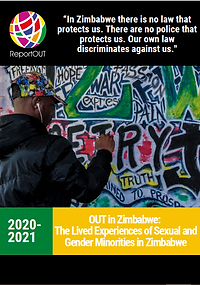
The key findings of our OUT in Zimbabwe research, found that:
The majority of sexual and gender minorities' families have not been supportive of their family member as a SOGIESC person: not supportive (36.4%), some family members supportive (34.5%), have a supportive family (20%), and prefer not to answer (9.1%). Some sexual and gender minorities have been disowned by their family because of their SOGIESC identity.
The majority of sexual and gender minorities have not been denied custody, guardianship, or access to their own children. - Most sexual and gender minorities are highly educated (Higher education 50.9%, secondary education 21.8%). Despite this, they still have limited job security.
More than a third of sexual and gender minorities face discrimination in the job market because of who they are.
A concerning number of sexual and gender minorities cannot afford health care (49.1%). Over a quarter refuse to use mainstream hospitals because of who they are.
Over half of sexual and gender minorities have mental health problems as a result of how they have been treated because of their SOGIESC identity.
The majority (87.3%) of sexual and gender minorities feel that there are not enough support services for sexual and gender minorities in Zimbabwe.